Average Reviews:

(More customer reviews)Are you looking to buy Free Culture: The Nature and Future of Creativity? Here is the right place to find the great deals. we can offer discounts of up to 90% on Free Culture: The Nature and Future of Creativity. Check out the link below:
>> Click Here to See Compare Prices and Get the Best Offers
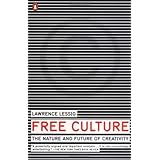
Free Culture: The Nature and Future of Creativity ReviewLawrence Lessig's "Free Culture" is nothing short of brilliant. It outlines an incredibly important modern problem that is lost under the noise of more pressing concerns like the war in Iraq or corporate scandals. That problem is the loss of our culture at the hands of intellectual property law. And what that problem lacks in immediacy and prime-time-worthy sex appeal, it makes up in long-term consequences.Lessig does a formidable job of making the issue come alive for both experts and laymen with his use of anecdotes that clearly illustrate how the ever-growing term and scope of copyright have stifled creativity and shrunken the portion of our culture in the public domain. He shows how the content industry is trying to redefine IP as the equivalent of tangible property, when it is not and has never been, and how that industry has manipulated Congress and the Courts to get closer to its goal.
If you followed the Eldred v. Ashcroft case (like I did; I was lucky to be at oral argument before the Supremes), you'll want to pick up this book for Lessig's inside account. Most of it is a mea culpa for not realizing that the Court didn't want a constitutional argument, but a consequentialist one. I'm not sure this would have made a difference. The Court's right, who, like Lessig, I thought would chime in for a strict reading of what is clear language of "limited times" in the Copyright Clause, must have had some special reason for turning their backs on their originalist rhetoric and I doubt that a political argument would have changed their minds. I still can't understand what that reason might be, and I refuse to believe it's just the dead hand of stare decisis that gave Scalia pause. Lessig is obviously very upset at that Justice; while he does mention having clerked for Judge Posner, Lessig doesn't mention in his bio (neither in the dust jacket nor the back pages of the book) that he clerked for Scalia in 1990-91.
One curious thing about the book is that throughout it Lessig implies that he is a leftist and that the ideas he is advocating are leftist. He patronizingly writes at a couple of points that he would be surprised if a person on the right had read that far. I think he is selling himself-and conservative readers-short. In fact, there is very little in the book incompatible with a conservative or libertarian free-market viewpoint. Private interests using the power of the state to distort the market and quash their competitors, and an originalist Jeffersonian interpretation of the Constitution as the response are very conservative themes indeed.
But it's not all agreement. I, like most free marketeers, will object to parts of Free Culture. Foremost among them are Lessig's concerns about media concentration. The fact is that there are more options today in television and radio than 20 years ago, and the the explosion of Internet sites and blogs, which Lessig spends most of the book lauding, belies the idea that news can be controlled. And it is interesting that Lessig seems to understand this. He says that he has seen concentration only as market efficiency in action, and that only recently has he 'begun to change his mind'. His skepticism is reflected in the fact that he only dedicated a small section (7 pages) to the issue. Another point of contention will be some of the solutions he proposes. While I applaud the idea of shorter terms that must be renewed with payment of a token fee, compulsory licensing and fees paid out by the government out of general revenues is beyond the pail. Won't such mechanisms be ripe for corporate manipulation as well?
Still, small quibbles aside, this book beautifully puts the IP issue in perspective. Everyone is touched by copyright whether they know it or not. This book shows us how the future of our culture is a dark one unless we change course soon.Free Culture: The Nature and Future of Creativity Overview
Want to learn more information about Free Culture: The Nature and Future of Creativity?
>> Click Here to See All Customer Reviews & Ratings Now

0 comments:
Post a Comment