Average Reviews:

(More customer reviews)Are you looking to buy The Changing Vampire of Film And Television: A Critical Study of the Growth of a Genre? Here is the right place to find the great deals. we can offer discounts of up to 90% on The Changing Vampire of Film And Television: A Critical Study of the Growth of a Genre. Check out the link below:
>> Click Here to See Compare Prices and Get the Best Offers
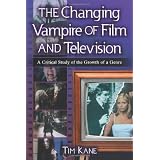
The Changing Vampire of Film And Television: A Critical Study of the Growth of a Genre ReviewMr. Kane has produced a scholarly analysis of vampires in movies and television. Rather than rehash old arguments about the psychological import of vampire stories or their effects upon the viewer, Kane has chosen to focus on the creatures themselves and how portrayals of them have changed over time. Specifically, Kane tracks changes in the appearance of cinematic vampires, how their bite is portayed, how humans are infected with vampirism, their hypnotic powers, how they are destroyed, as well as other motifs. His observations lead him divide vampire films and TV into three distinct periods: malignant, erotic, and sympathetic. A healthy selection of photos and Kane's scene by scene plot summaries of each film or show that he examines make this book a worthwhile acquisition even for the non-adademic.The Changing Vampire of Film And Television: A Critical Study of the Growth of a Genre OverviewVampires have been a fixture of film since Bela Lugosi brought Bram Stoker's Dracula to life on the big screen in 1931. Over the decades the genre has been far from static, as vampire narratives changed and evolved with the appetites of their viewing public. First depicted as formally dressed villains, vampires would later be portrayed as supernatural beings with some human characteristics, and still later as sympathetic figures. Focusing on 19 representative films and television productions, this critical study tracks the evolutionary changes of the screen vampire. It explores the factors that cause a genre to change and examines the alternating cycles of audience expectation. The author identifies three distinct modes of depiction: the Malignant Cycle (1931–1948), comprised primarily of the Universal films; the Erotic Cycle (1957–1985), which encompasses Hammer films and popular television shows such as Dark Shadows; and the Sympathetic Cycle (1987–present) including recent offerings such as The Lost Boys, Interview with the Vampire and Buffy the Vampire Slayer. Each film is evaluated in seven key areas including the act of the vampire biting the victim; process of the victim's infection; physical appearance and demeanor of the vampire and the vampire expert; and the eventual destruction of the vampire. Appendices include a complete filmography of the films examined.Want to learn more information about The Changing Vampire of Film And Television: A Critical Study of the Growth of a Genre?
>> Click Here to See All Customer Reviews & Ratings Now

0 comments:
Post a Comment