Average Reviews:

(More customer reviews)Are you looking to buy Reelpolitik: Political Ideologies in '30s and '40s Films (Prager Series in Political Communication)? Here is the right place to find the great deals. we can offer discounts of up to 90% on Reelpolitik: Political Ideologies in '30s and '40s Films (Prager Series in Political Communication). Check out the link below:
>> Click Here to See Compare Prices and Get the Best Offers
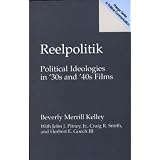
Reelpolitik: Political Ideologies in '30s and '40s Films (Prager Series in Political Communication) ReviewMy old History of Film prof used to say "You can't understand a film unless you understand the environment that produced it." Beverly Kelley and her co-authors (the redoubtable Jack Pitney, Craig Smith, and Herbert Gooch) have taken the pivotal years of the 20th Century -- from the start of the Great Depression to the end of WWII -- and examined how the ideological turmoil fomented in those churning times was rendered in celluloid, providing an iconography in black and white that still illuminates our thoughts today.Eight films arrayed in a dialectical pairing of opposites provide the framework for the exploration of the ideologies that not only infused the sensibility of the times, but ripped at the very fabric of American life. Communism, Fascism, elitism, isolationism, and their opposites are all given voice through the medium of the Hollywood film. Some of the selections are obvious -- "Citizen Kane", "Casablanca" -- some obscure -- "Gabriel Over the White House", "Our Daily Bread" -- but all express a notion of what it was to be an American in a country at the crossroads of history.
From a people in the depths of the Depression still struggling with the aftermath of WWI, to a world power facing a new -- if still uncertain -- future, this American experience -- illuminated by film -- is the real subject of "Reelpolitik". Like a surveyor with a transit, Beverly Kelley uses these eight films to define the foundation of the culture which was to follow. It is a foundation on which we still stand today.
"Reelpolitik" is a welcome addition to the library not only of the history or film buff, but of anyone who loves the popular culture that made us who we are. In the end it should not be surprising that we can find some notion of what it means to partake of American culture by examining the messages found in film. As we approach the end of the first century to have its entire history preserved in this most living medium, what is of lasting interest is not the flickering curio of old haircuts and out-of-date fashions in the "old time movies", but a view of how we once saw ourselves and the times that produced those visions. And if we look honestly and clearly into that antique lens, the visage we see is startlingly, brightly, like our own.Reelpolitik: Political Ideologies in '30s and '40s Films (Prager Series in Political Communication) OverviewThe movies that document American history during the interwar years still hold relevance today. While we may be put off by the corny sentimentality popular at the time, we feel attracted, despite our 1990s veneer of sophistication, to healthy portions of unadulterated American spirit. Americans resist encumbering themselves with political labels, Kelley asserts, content to remain simultaneously fragmented between elitism and populism, isolationism and interventionism even today, yet remain somehow united by a fundamental essence they can't quite define, but readily recognize as the American can-do attitude. Using the unique vantage point of eight classic American movies--Mr. Smith Goes to Washington, Magnificent Ambersons, Gabriel Over the White House, Citizen Kane, Casablanca All Quiet on the Western Front, Daily Bread, and The Fountainhead--Kelley and her colleagues explore the political ideologies thrumming through the American psyche. The stock market crash and ensuing depression proved a defining experience. For the first time, the national psyche was sent careening toward alien political ideologies; the seductiveness of communism and fascism took hold in the wreckage wrought by the Depression. American foreign policy likewise fluctuated from an isolationist stance adopted after fighting the "war to end all wars" to an interventionist response to the intensifying pressure to vanquish communist and fascist bullies. Students, scholars, and the general public will find intriguing insights on a period of national catastrophe and triumph.
Want to learn more information about Reelpolitik: Political Ideologies in '30s and '40s Films (Prager Series in Political Communication)?
>> Click Here to See All Customer Reviews & Ratings Now

0 comments:
Post a Comment